O.N.S.= OLD NEW STOCK and refers to an item which, for whatever reasons, has not been offered for sale from the date of publication to the date of this listing. It is NEW but old stock and should be in New condition. Any deviation from the new condition will be detailed separately.
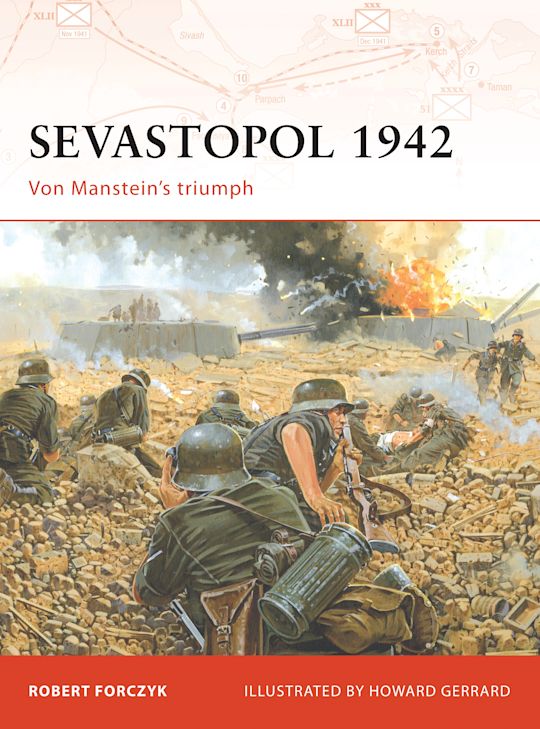
A detailed, illustrated examination of the various factors at play during Operation Sturgeon Haul.
In late July 1941, Hitler ordered Army Group South to seize the Crimea as part of its operations to secure the Ukraine and the Donets Basin, in order to protect the vital Romanian oil refineries at Ploesti from Soviet air attack. After weeks of heavy fighting, the Germans breached the Soviet defences and overran most of the Crimea. By November 1941 the only remaining Soviet foothold in the area was the heavily fortified naval base at Sevastopol.
Operation Sturgeon Haul, the final assault on Sevastopol, was one of the very few joint service German operations of World War II, with two German corps and a Romanian corps supported by a huge artillery siege train, the Luftwaffe's crack VIII Flieger Korps and a flotilla of S-Boats provided by the Kriegsmarine.
This volume closely examines the impact of logistics, weather and joint operational planning upon the last major German victory of World War II.
Table of Contents
Origins of the campaign Chronology Opposing plans Opposing leaders Opposing forces Operation Trappenjagd, 8-21 May 1942 Air and naval operations around Sevastopol 1941-42 Operation Störfang - the third assault on Sevastopol
Aftermath The battlefield today Bibliography Index